


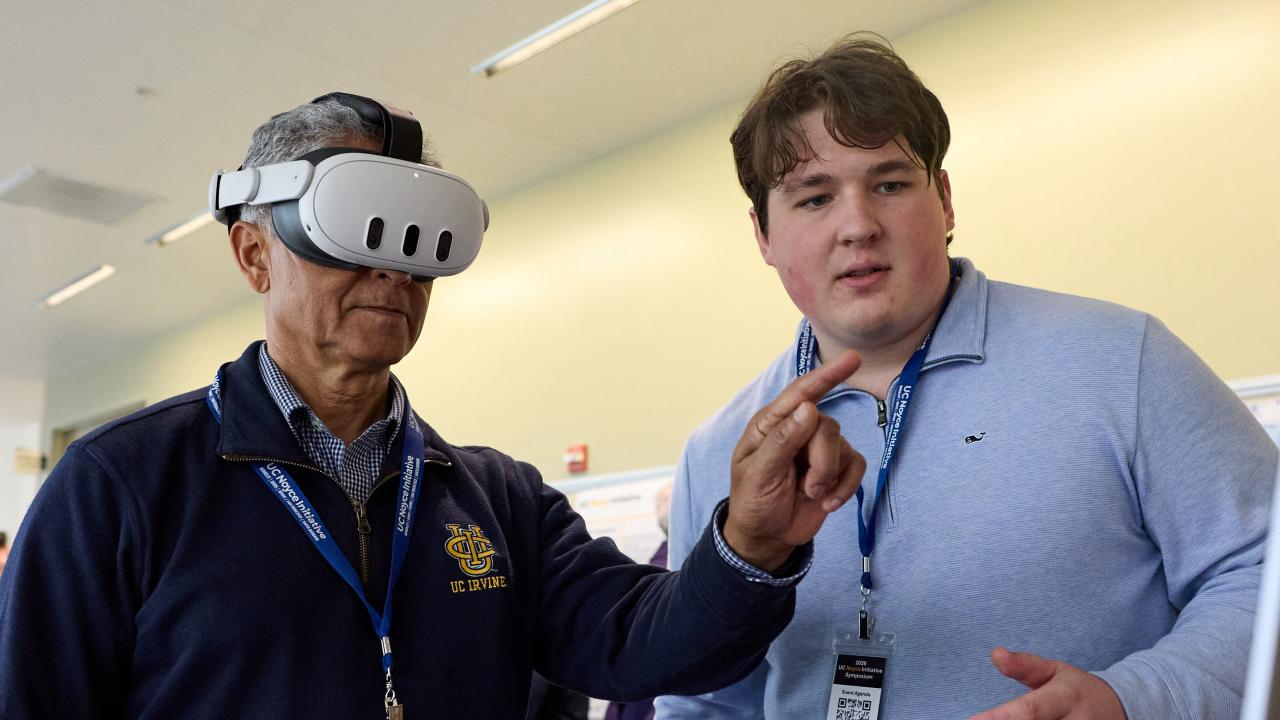
Collaboration Takes Center Stage at UC Noyce Symposium
UC Davis hosts third symposium for five-campus consortium
The room hummed with energy as clusters of faculty, researchers and students leaned into conversation, gesturing toward posters, exchanging ideas and making connections in real time.
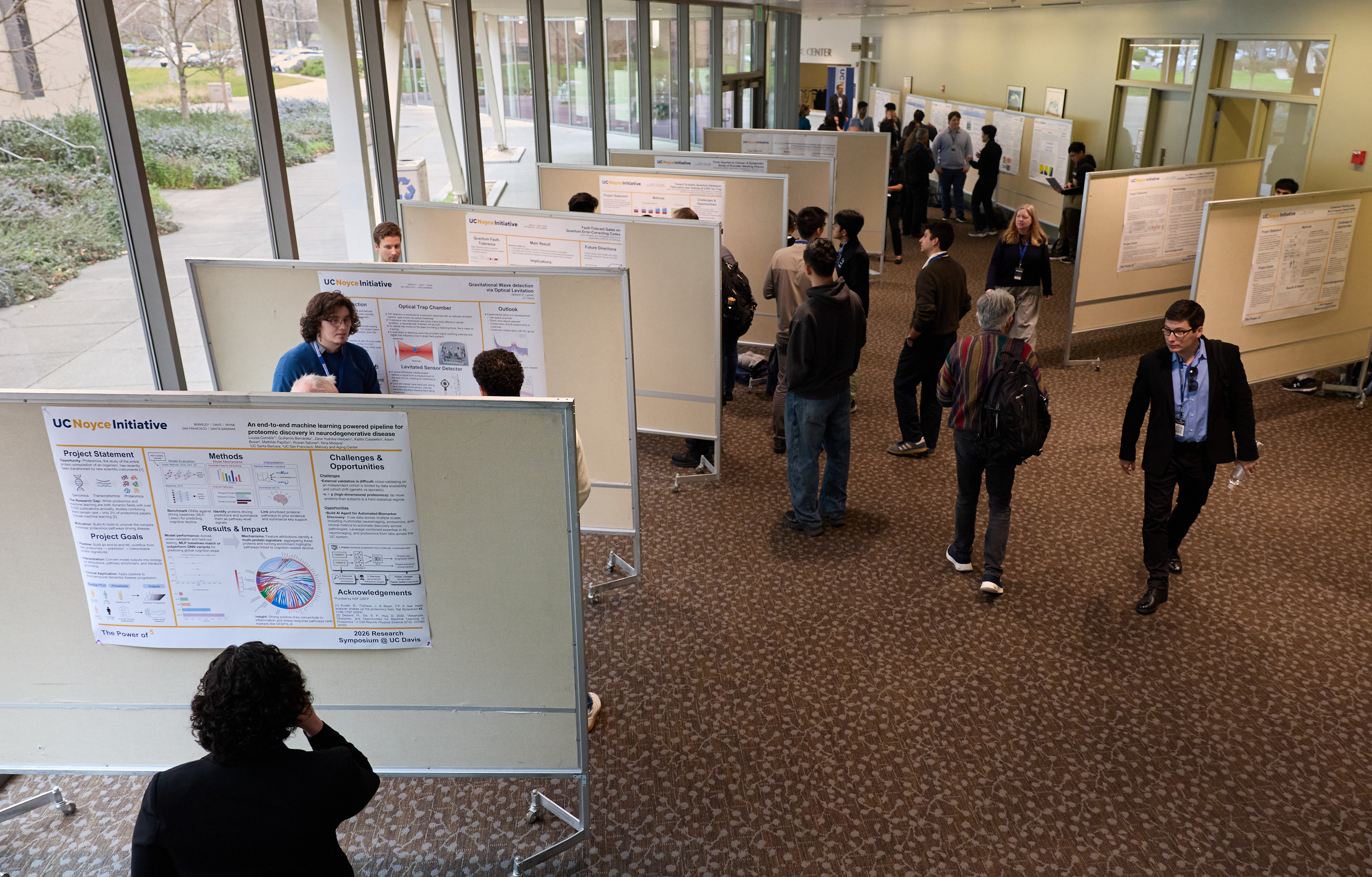
At the UC Noyce Initiative Symposium, hosted Feb. 24 at the UC Davis Conference Center, the graduate student poster session quickly became the heartbeat of the day. What began as an informal part of the symposium soon evolved into a dynamic exchange of ideas across disciplines and campuses, offering a vivid glimpse into the future of research powered by collaboration.
From custom AI models designed to read brain scans for early signs of Alzheimer’s disease, to explorations of dark matter, to cybersecurity innovations and virtual reality tools for stroke rehabilitation, the projects on display reflected both the breadth and ambition of the UC Noyce Initiative. Each was distinct. Together, they told a larger story of what becomes possible when five UC campuses work in concert.
A convergence of ideas and people
The symposium brought together approximately 100 attendees from across UC Berkeley, UC Davis, UC Irvine, UC San Francisco and UC Santa Barbara. The day was an embodiment of “Power of 5,” according to event organizers. Vice chancellors for research from all five campuses were in attendance, as well as members of the Robert Noyce Trust, underscoring a shared institutional commitment to advancing digital innovation for the public good.
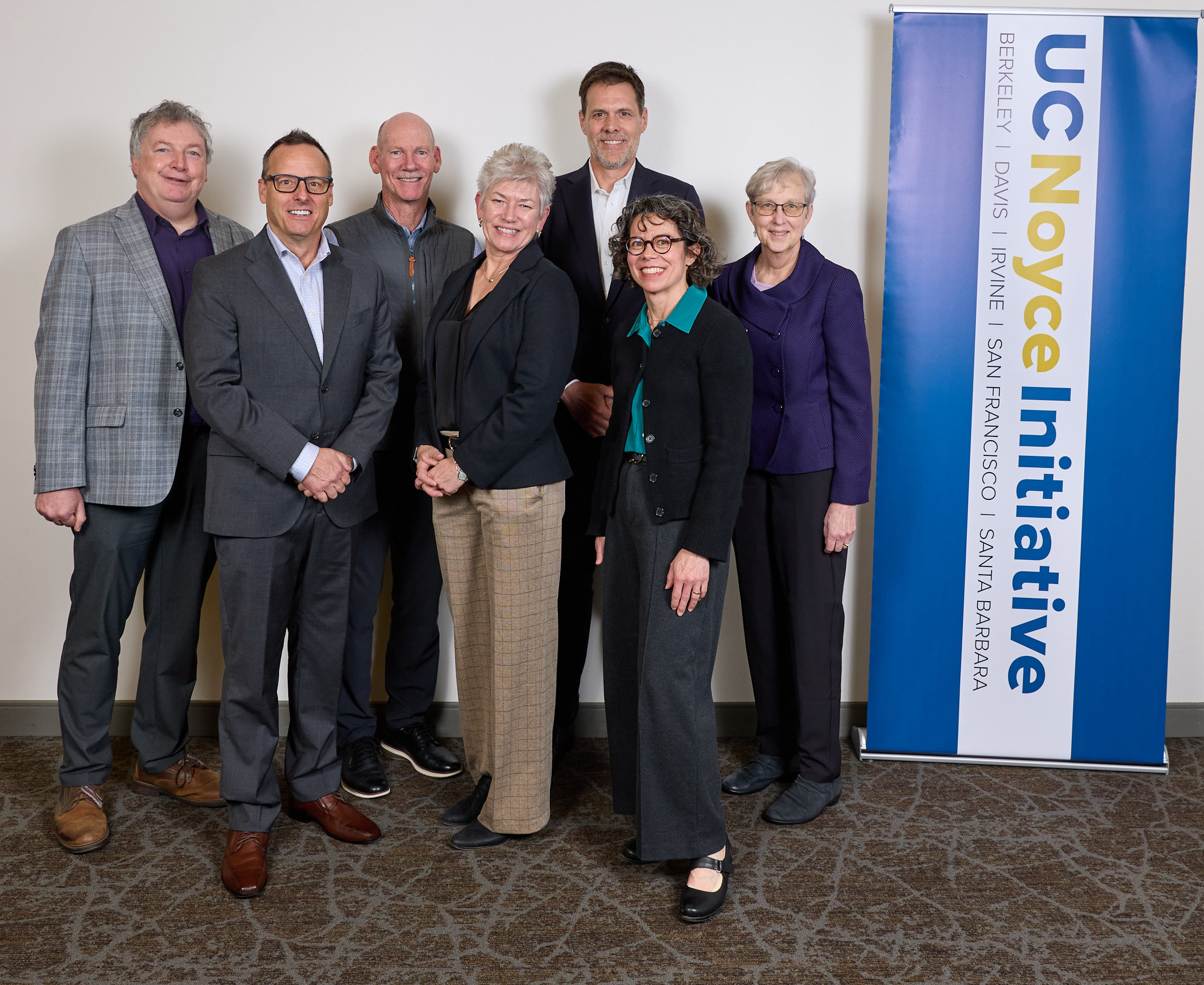
Throughout the day, panel discussions and presentations explored core areas of focus for the initiative, including quantum information science, cybersecurity and privacy, and computational health. Yet it was in the unscripted moments between sessions, around posters, in hallway conversations that the symposium’s impact was most visible.
“These kinds of events are catalysts for collaboration,” one attendee noted, reflecting a sentiment echoed across the room.
Research that spans disciplines and boundaries
The poster session highlighted not only the technical sophistication of the work underway, but also the interdisciplinary nature of UC Noyce–funded research.
Graduate students stood alongside faculty mentors, walking peers through projects that bridged engineering, medicine, physics and computer science. In one corner, a team demonstrated how machine learning could accelerate the interpretation of neurological imaging. Nearby, another group discussed advances in quantum systems, while across the room, researchers explored new approaches to protecting data privacy in an increasingly connected world.
“I’m very grateful to Noyce for bringing this expertise together,” said Edward Kim, Ph.D., postdoctoral scholar from UC Berkeley, capturing a recurring theme of the day – that the initiative’s value extends beyond funding to the networks it helps build.
Soheil Ghiasi, Ph.D. of UC Davis, emphasized that point more directly, noting that while financial support is critical, “the connections the Noyce Symposium makes possible are perhaps even more valuable for fostering innovation.”
Carrying forward a legacy of innovation
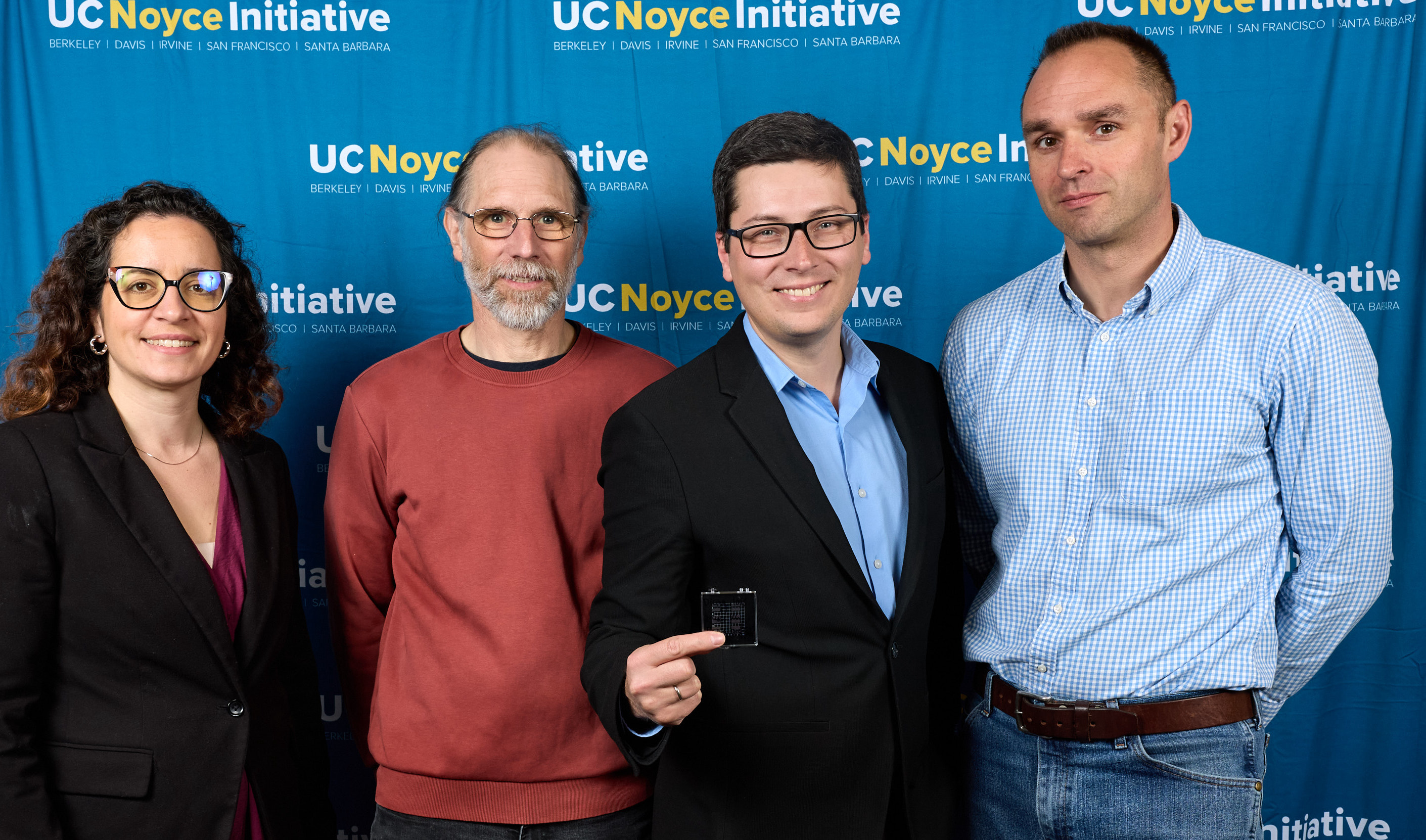
That spirit of collaboration is rooted in the legacy of Robert Noyce, co-founder of Intel and a pioneer of the integrated circuit, and Ann S. Bowers, a trailblazer in the early days of Silicon Valley. For researchers working at the frontiers of science and technology, the Noyce legacy is both inspiration and challenge
“What we want to do for quantum is like what Robert Noyce did for integrated circuits,” said Hartmut Haeffner, Ph.D. of UC Berkeley, drawing a direct line between past breakthroughs and future possibilities.
Building what comes next
As the symposium moved into its afternoon sessions, momentum carried into a series of breakout discussions and panel Q&As that invited deeper engagement across the UC Noyce Initiative’s core research areas: quantum information science, cybersecurity and privacy, and computational health.
These conversations created space not just to showcase progress, but to surface shared challenges and opportunities. Among the most consistent themes was a collective desire to strengthen infrastructure for collaboration. Specifically, the need for a UC-wide cloud environment that would allow researchers to securely share and analyze large-scale data across all five campuses.
The ability to move large data sets seamlessly and securely was seen as essential to accelerating discovery. It was a practical idea, but one rooted in the same spirit that defined the day – that the most meaningful advances will come from working together.
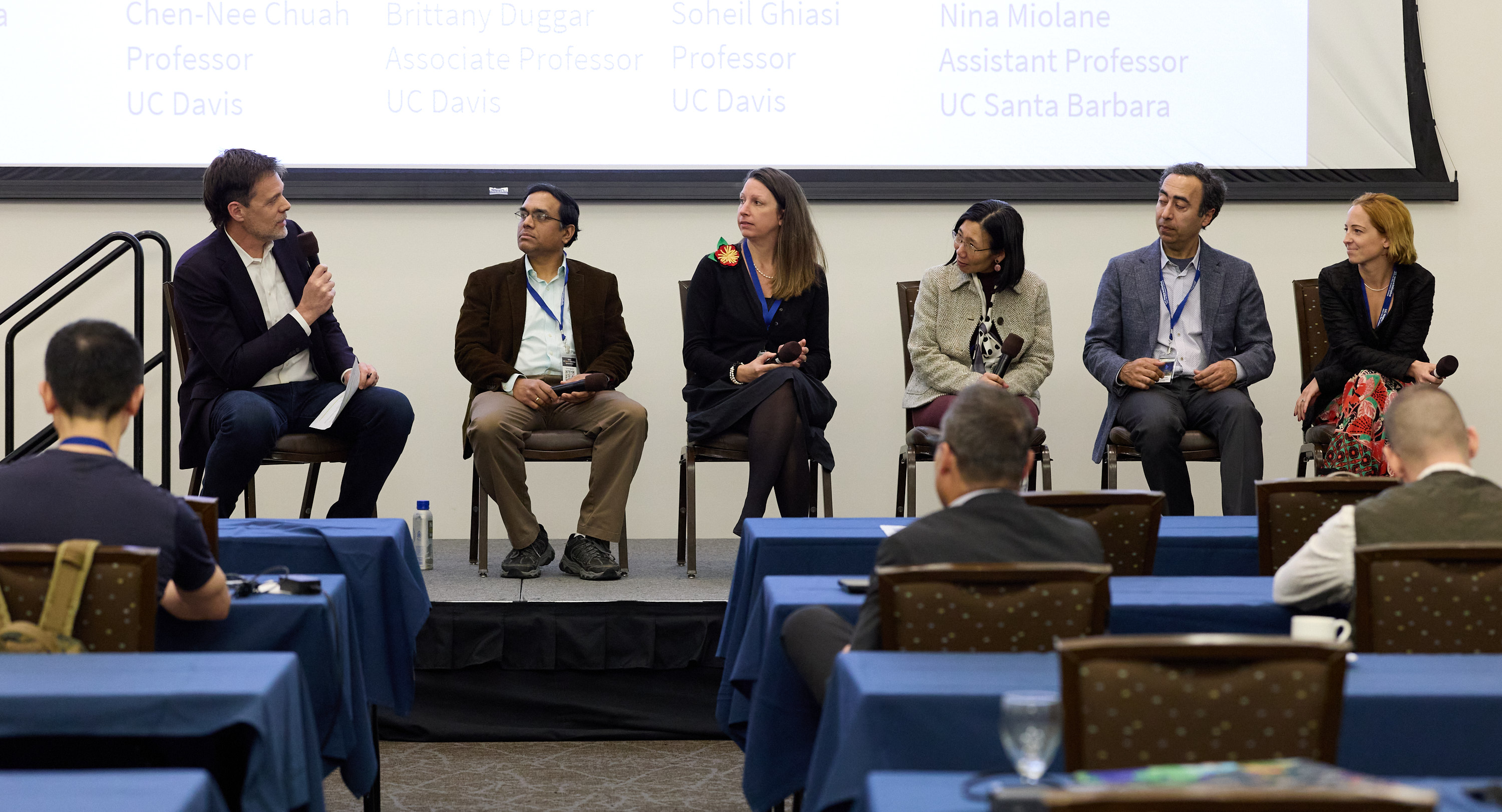
As discussions wrapped and attendees began to depart, the sense of momentum was unmistakable. New connections had been formed, ideas had been tested and possibilities had begun to take shape.
“This is exactly what the UC Noyce Initiative was designed to do,” said Executive Director Bryan Kerner. “Bring together exceptional minds across disciplines and campuses and create the conditions for innovation that none of us could achieve alone.”
View Photos from the UC Noyce Initiative Symposium at UC Davis.
Media Resources
Sarah Colwell is a freelance writer and marketing strategist who specializes in serving higher education clients.