Computational Health

UC Noyce Initiative Launches New Graduate Fellowship

The UC Noyce Initiative has reached a significant milestone in its mission to advance digital innovation for the public good. Today, (May 13) the Initiative announced the launch of a new graduate student fellowship program designed to support the next generation of interdisciplinary researchers across five University of California campuses.

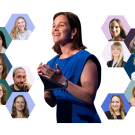
Building The Gold STANDARD for Women’s Brain Health

Good science is contingent on good data, and the quality of that data often starts with asking the right questions. 

For women’s brain health, a field that has been understudied for decades, foundational questions are quite literally just beginning to be asked. Rather than be discouraged by this deficit, researchers at the Ann S. Bowers Women’s Brain Health Initiative – an effort supported in part by the UC Noyce Initiative – see an opportunity.

UC Noyce Workshop Explores Bold Future for Computational Health Research

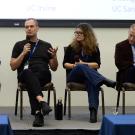
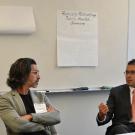
On June 16, leading scientists, faculty and research executives from across five University of California campuses gathered at UC San Francisco’s Mission Bay campus for a high-stakes strategic workshop hosted by the UC Noyce Initiative. 

Their mission was to identify key areas of opportunity in computational health that could be advanced through multi-million, cross-campus research investment. These ideas were then presented as recommendations to the UC Noyce Initiative's executive committee for their consideration as part of an on-going request for proposals (RFP) process.

Cracking the Code: AI and Alzheimer’s Disease

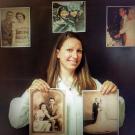
For UC Noyce Initiative researchers Brittany Dugger, Ph.D. and Chen-Nee Chuah, Ph.D., their passion for Alzheimer’s research is deeply personal. 

In her late teens, Dugger watched as both her grandmothers— Grandma Morenski and Grandma Dugger—suffered from the devastating effects of the disease. Despite sharing the same diagnosis, their symptoms were strikingly different. That inconsistency left her with lingering questions: 

How could two people experience the same disease in such different ways? 

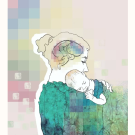
Babies Breath

The dim glow of the hospital room cast flickering shadows as Soheil Ghiasi, Ph.D., gripped his wife’s hand. The rhythmic beeping of the fetal monitor filled the air, punctuated by the quiet murmur of nurses and the occasional contraction-induced groan. He had spent his career solving complex engineering problems, but none of that prepared him for this moment—the birth of his first child.

 “I’m concerned about your daughter’s heart rate. I’d like to consider a C-section,” the doctor said, his voice calm but firm. 


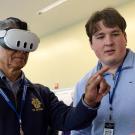
Revolutionizing Stroke Rehabilitation

A stroke can change a person’s life in an instant. 

The results can mean death or surviving with physical limitations that can require months or even years of rehabilitation, which can be time-consuming, expensive and emotionally draining for both patients and their families. 

Mimicking the Minds of M.D.s

Artificial intelligence (AI) is poised to revolutionize healthcare, assisting doctors in diagnosing diseases, analyzing test results and predicting health risks. However, most AI systems focus on just one type of data at a time, limiting their ability to provide a comprehensive medical assessment. Unlike AI, doctors consider multiple factors—symptoms, medical history, lab results, and imaging scans—when making a diagnosis, leading to more accurate and informed decisions.