


Our Purpose
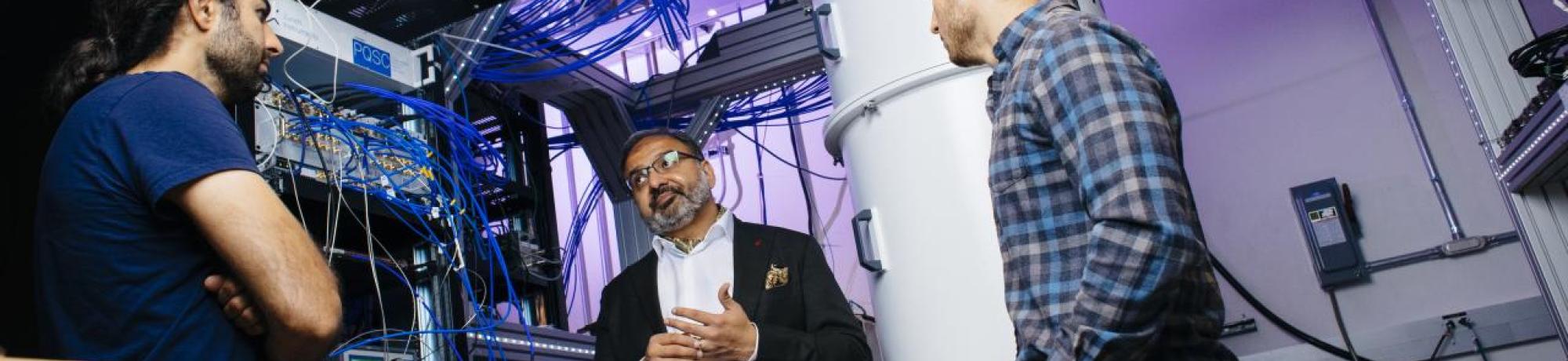
At the quantum scale, the world looks very different. The strange behavior of atoms, electrons and photons is already the basis of technologies we rely on every day, including MRI scanners, lasers, GPS and the semiconductor chip. As researchers learn to measure and control quantum properties with greater precision, they open the door to new tools for medicine, science and industry.
UC Noyce supports researchers and thinkers from all disciplines, career stages and backgrounds who are advancing quantum science and technology. That includes quantum sensing, imaging, measurement, materials, communication and computing, along with the people and partnerships that turn discoveries into real-world impact.
The Opportunity
Quantum technologies can detect signals far too faint for conventional instruments. They can measure time, motion, magnetic fields, and gravity with exceptional accuracy, and they can help solve problems that classical methods struggle with. These capabilities could change how we diagnose disease, image the human body and the natural world, navigate without GPS, monitor the environment and design new materials and medicines.
As a pioneer of the semiconductor industry, a technology built on quantum physics, Robert Noyce would have recognized the promise these advances hold today.
UC Noyce takes a broad view of its thematic areas. Quantum science and technology covers many disciplines that measure, control or apply quantum properties, including but not limited to:
- Medical imaging and MRI: new MRI techniques built on nuclear spin, hyperpolarization for sharper and faster scans, and more accessible low-field imaging
- Brain and body sensing: quantum magnetometers that measure brain and heart activity without large, shielded equipment
- Biological sensing at the nanoscale: quantum defects in diamond and other materials that track temperature, magnetic fields and chemical activity inside living cells
- Quantum-enhanced imaging and microscopy: entangled or “squeezed” light that improves image resolution and protects sensitive biological samples
- Precision timing and navigation: atomic clocks, quantum gyroscopes and accelerometers for navigation when GPS is unavailable
- Earth and environmental sensing: quantum gravimeters and magnetometers for mapping groundwater, minerals, geological hazards and climate-related change
- Quantum materials and devices: superconductors, photonic chips and engineered materials that make quantum technologies more reliable and scalable
- Secure communication: quantum key distribution and quantum networks for protecting sensitive data
- Quantum simulation and computing: quantum algorithms and simulations for chemistry, drug discovery and materials design
- Quantum and AI: machine learning that improves quantum control, sensor calibration and analysis of quantum measurement data
- Responsible quantum innovation: the societal, ethical and security impacts of quantum technologies, and fair access to their benefits
The following are just a few examples of how UC Noyce Initiative researchers are making an impact in quantum science:
When Quantum Systems Combine
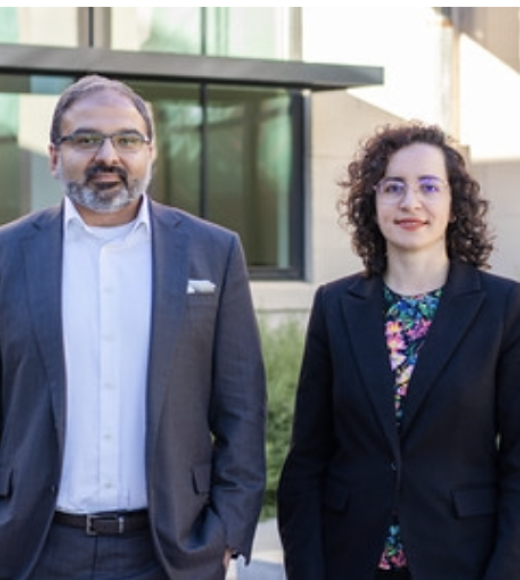
Marina Radulaski, UC Davis Assistant Professor, and Irfan Siddiqi, UC Berkeley Professor, are exploring if superconducting quantum computers can become a tool for designing analog quantum devices in photonic platforms.
Click here to learn more about this UC Noyce Initiative Project.
Increasing Speed and Reliability
Associate Professor Andrew Jayich, Professor Hartmut Haeffner, Assistant Professor Davis Patterson and Associate Professor Yufei Ding are using novel 3D printing methods to develop 3D ion traps that can be used to increase the speed and reliability of ion trap quantum computers. Once developed and tested, the team will work to adapt the design for scalability. Such advancements might have implications on atomic clocks and mass spectrometry.
Click here to learn about one of the PIs on this UC Noyce Initiative Project.
Increasing Processing Power
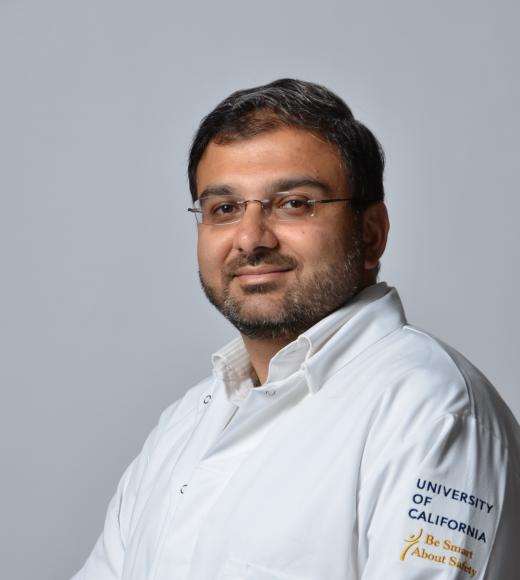
Professor Irfan Siddiqi is designing modular quantum processors which could increase the processing power of quantum computers and someday may lead to the development of inexpensive, large-scale quantum computers.
Click here to learn more about Professor Siddiqi.