



Our Purpose
Computing and data have changed how we approach questions in clinical care and health science. Health records, medical images, genomic data, wearable devices and population health data now give researchers more information than ever before. Computational methods help turn that information into better ways to understand, prevent, diagnose and treat disease.
UC Noyce supports researchers and thinkers from all disciplines, career stages and backgrounds who are advancing computational health and driving discovery where digital innovation, medicine and the health sciences meet.
The Opportunity
We aim to support collaborative research that applies data science, modeling and computing to important health questions in entirely new ways. This work can transform diagnostic tools, treatments and disease tracking. It can also help researchers and clinicians understand the social and environmental factors that shape health and make sure new tools work for every patient. Our goal is to improve health and well-being for all communities.
UC Noyce takes a broad view of its thematic areas. Computational health covers many disciplines that apply computing and data science to health, including but not limited to:
- Brain and mental health: neuroimaging analysis, brain network modeling and machine learning to detect early signs of neurological and mental health conditions
- Scalable computational infrastructure: secure cloud platforms, data pipelines and high-performance computing for large biomedical and clinical datasets
- Healthy aging and emerging health technologies: sensor data analytics, predictive models and smart-home systems that help older adults live independently
- Social and environmental factors in health: geospatial analysis, data integration and modeling of how neighborhood, environment and access shape health outcomes
- Therapeutic interventions: computational drug discovery, molecular simulation and in silico clinical trials
- Diagnosis and medical imaging: computer vision and deep learning to support faster, more accurate diagnosis
- Precision medicine: genomic data analysis, bioinformatics and multi-omics modeling to tailor treatments to individuals
- Digital health and remote monitoring: signal processing and real-time analytics for data from wearables and mobile devices
- Public health and disease tracking: epidemiological modeling, outbreak forecasting and natural language processing of health records and reports
- Health equity: bias detection in clinical algorithms and data methods that make sure underrepresented populations are included
- Clinical decision support: human-centered design of predictive tools and interfaces that clinicians can trust and use
The following are just a few examples of how UC Noyce Initiative researchers are making an impact in computational health:

The Ann S. Bowers Women's Brain Health Project
Most of what we know about health and disease centers on the male body. Neuroscientists overlook aspects of the human condition relevant to half of the global population (e.g. the menstrual cycle, the pill, pregnancy, menopause). The Ann S. Bowers Women's Brain Health Initiative is one of the flagship projects of the UC Noyce Initiative. It is committed to advancing the study of women's brain health through deeply collaborative science.
Click this box to learn more about the Ann S. Bowers Women's Brain Health Initiative.
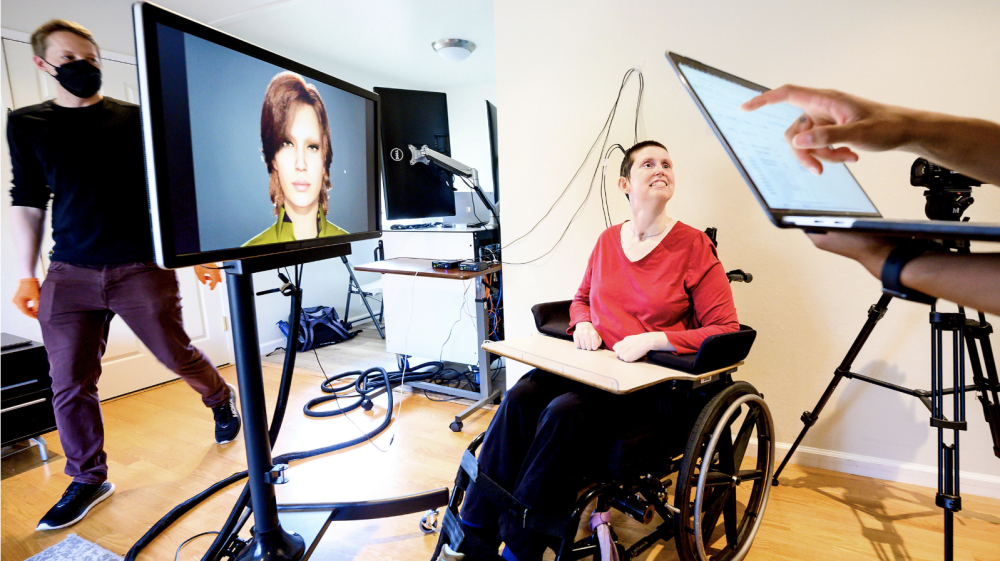
Communication Tools for Mute and Paralyzed
Assistant Professor Gopala Anumanchipalli utilizes computational models of spoken language to develop more effective and personalized communication tools for individuals who are unable to speak, including paralyzed individuals.
Click this box to learn more about this UC Noyce Initiative research project.

Making Prosthetics More Lifelike
UC Noyce Initiative researcher Jonathon Schofield uses bionic engineering and assistive robotics to improve prosthetic limbs. Schofield is part of a team of engineers, scientists and surgeons who working to make life easier for amputees through a combination of surgery, advanced machine learning and smart prosthetics.
Click this box to learn more about this UC Noyce Initiative project.

AI and Alzheimer's Disease
This multi-campus collaborative team plans to develop an accessible deep learning framework for neuropathology and neuroradiology image analysis to aid deeper phenotyping of neurodegenerative (e.g. Alzheimer’s and dementia) and cerebrovascular (e.g. stroke) diseases.
Click this box to learn more about this UC Noyce Initiative project.